I adhere by the belief that the best research (1) sees real world practical applications, and (2) an attempts to educate outside one’s own field. Therefore, I have to date authored and contributed across numerous policy reports, news articles, and appearances/contributions on popular press. Please see them below.
Popular Press Articles
Elections
Alexander, Robert and John A. Curiel. “A tale of two polls. Why are poll results about Ohio Issue 1 so very different? | Experts.” Columbus Dispatch, August 2, 2023
Curiel, John A. “How to Avoid Pitfalls in Detecting Election Fraud.” Real
Clear Politics, December 5, 2021
Curiel, John A. “Underfunded Polling Places Add to Voting Access Concerns.” Real Clear Politics, July 16, 2021
Curiel, John A. and Jesse Clark. “COVID-19 and Polling Place Access in Wisconsin.” MIT Elections Data and Science Lab Blog, June 15, 2021.
Curiel, John A. “Measuring and Managing Splits in Election Administration.” MIT Elections Data and Science Lab Blog, February 17, 2021.
Curiel, John A. and Charles Stewart III. “Biden’s win shows that suburbs are the new swing constituency.” The Washington Post, The Monkey Cage Blog, November 25, 2020
Curiel, John A. and Angelo Dagonel, “Election Administration Challenges and Effects in Wisconsin“. Lawfare, September 25, 2020
Curiel, John A. and Jack Williams, “Bolivia dismissed its October elections as fraudulent. Our research found no reason to suspect fraud.” The Washington Post, “The Monkey Cage Blog,” February 27, 2020
Curiel, John A. “Looking for Look-Up Tools: Online voter tools in the 2018 EPI“. MIT Elections Data and Science Lab Blog, December 4, 2019
Congress & Gerrymandering
Curiel, John A. “Who Draws a ‘Fair’ Map?, Real Clear Policy, January 10,
2022
Curiel, John A. “Redistricting Reform Goes Wrong.” Real Clear Policy, December 30, 2021
Curiel, John A. “Redistricting: Does Shape Matter?.” Real Clear Policy,
August 20, 2021
Curiel, John A. “Gerrymandering and the Point of No Return.” Real Clear Politics, June 20, 2021
Curiel, John A. “It’s Time to Increase the Size of the House of Representatives.” Real Clear Politics, July 18, 2021
Steelman, Tyler and John A. Curiel, “Here’s one way to end partisan gerrymandering: Don’t break up Zip codes.” The Washington Post, “The Monkey Cage Blog,” October 22, 2018
Political Communication
Curiel, John A. “Concern about Coronavirus and Political Messaging: A First Look“. MIT Elections Data and Science Lab Blog, March 5, 2020
Christensen, Devin and John A. Curiel, “What Trump’s tweets tell us about his TV viewing — and his thinking.” The Washington Post, “The Monkey Cage Blog,” April 13, 2017
Other
Mott, Gabriel and John A Curiel. “Ohio legislature ignores SB 83’s skewed impact on educational evaluations.” Cleveland Plain Dealer (Op-Ed), December 13, 2023
Policy Reports & Projects
Alexander, Robert and John A. Curiel. July 28, 2023. Northern Poll, Special Ohio Election Topline Results.
I designed, launched, and analyzed this poll in combination with my co-authors. My work on the poll consisted of designing the Qualtrics survey, question wording and order, weighting the survey responses, in addition to creating the code to produce all visuals and topline results. The poll can be found indexed on 538’s Ohio Poll Aggregator here. National coverage includes Time Magazine, US News & World Report, and MSNBC.
Alexander, Robert, John A. Curiel, and Tyler S. Steelman. October 18, 2022. Northern Poll Topline Results.
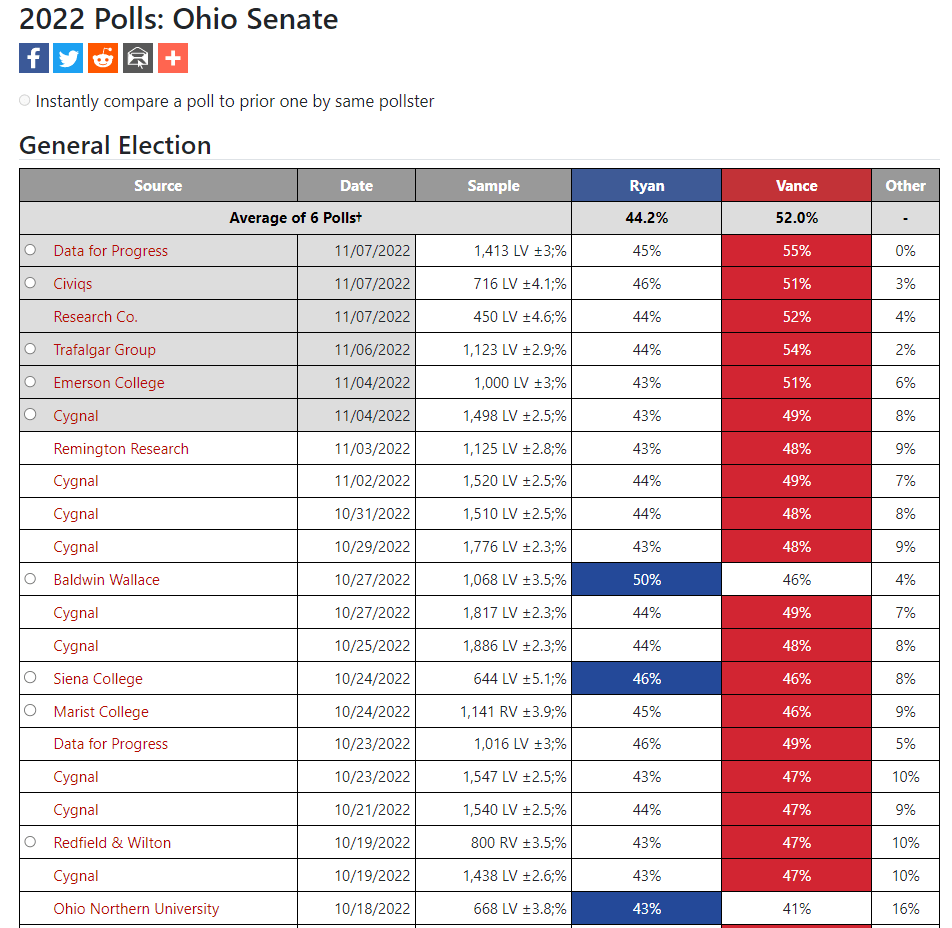
I designed, launched and analyzed this poll in combination with my co-authors. My work on the poll consisted of weighting the survey responses, in addition to creating the code to produce all visuals and topline results. A further discussion of the work with elaboration on the implications can be found here, with national coverage on the 270 to win senate aggregator here.
Curiel, John A., Charles Stewart III, and Jack R. Williams. April, 2021. “The Blue Shift in the 2020 Election.” MIT Elections Data and Science Lab.
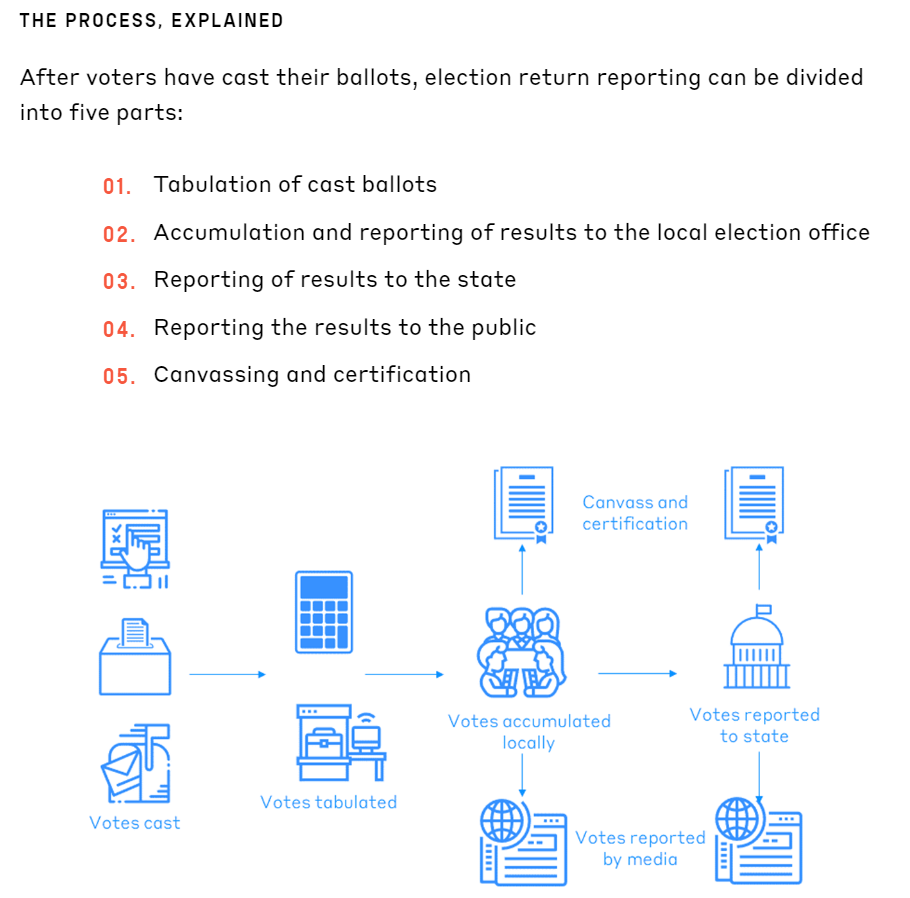
I authored this report in collaboration with Charles Stewart and Jack Williams with the MIT Election Data and Science Lab as part of our post-2020 election analyses on the speed and political implications of election night reporting. The early results informed election night reporting calls by CBS and NBC, with the final work here a descriptive analysis of when states reported results, the speed in which they did so, and the political implications. One key finding is the role in which state legislatures purposefully slow down reporting of election night results by imposing mandates that mail ballots be counted only after election day polls close. These results receive elaboration in my forthcoming chapter in Pandemic at the Polls, published by Lexington Books.
Election Science: A Proposed NSF Convergence Accelerator Grant.
As part of the MIT Elections Data and Science Lab, I organized in combination with Declan Chin and Abigale Belcrest the qualitative analysis and workshop logistics for a two-part set of conference workshops regarding potential areas of research in elections science. Our role in the conference consisted of aggregating conference attendee thoughts for the purpose of guiding discussion on grant proposals for the National Sciences Foundation. Initial data visualization of attendee thoughts can be found here, with the in depth analysis forthcoming in the collection on post-2020 election works, Pandemic at the Polls, published by Lexington Books.
Elections Performance Index. MIT Elections Data and Science Lab
I collaborated with the MIT Elections Data and Science Lab as part of the broader effort to compile and present the 2018 edition of the Elections Performance Index. The index itself comprises 20 indicators, with my work focused on ensuring proper replication of these measures as derived from data sources such as the Election Administration and Voting Survey. My most in the weeds work consisted of weighting and improving the voter wait times, tracking online voter lookup tools, and voting by mail trends.
MIT Elections Data and Science Lab: Explainers
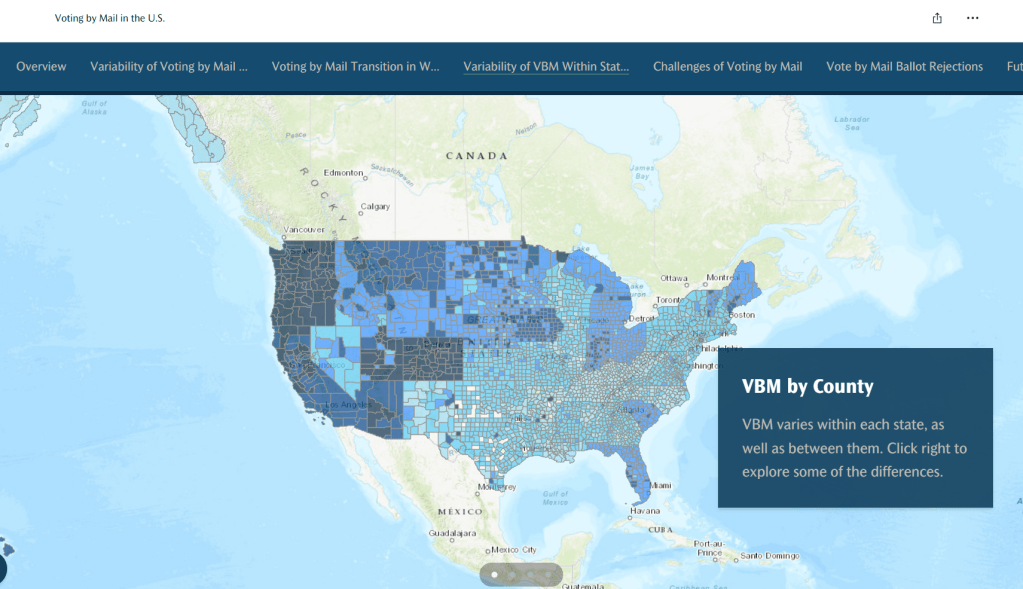
These Policy explainers regarding election administration and practices provide general knowledge to non-election experts. I authored the updates to the voting mode explainers, created the election return reporting explainer, and curated the MEDSL github that provided the relevant data and associated visualizations.
Stanford & Massachusetts Institute of Technology Healthy Elections Project. State Election Reports & Profiles.
I led the MIT Election Data and Science Lab team in collaboration with Stanford University to produce real time updates of elections (primary and general) during the 2020 election cycle. These reports sought to identify policy problems and solutions in the massive shift to mail balloting and general burden on the election administrative process. These reports near the end of the general election focused upon weekly ballot trends (i.e. ballot requests, rejections, etc.) by demographics available in voter lists. My direct contributions most heavily reflected the format of the weekly reports produced via R markdown, and the data visualization for all states analyzed.
Williams, Jack R. and John A. Curiel. March 2020. “Analysis of the Quick Count in the 2019 Bolivia Election.”
My work with Jack Williams consisted of a replication and analysis of the veracity regarding the competing claims by the Organization of American States (OAS) and Center for Economic and Policy Research (CEPR) regarding claims that Evo Morales rigged and illegally won the Bolivian 2019 presidential election. Originally contracted by CEPR to determine if their analyses could be independently replicated, our work followed three sections. First, independent data collection and replication of election trends of the parallel vote tabulation (PVT) for the 2019 election. Second, testing and analysis of the nature of the “discontinuity” that comprised the sole quantitative evidence of fraud for the 2019 election. Third, an audit of the regression discontinuity methods employed by the OAS as part of their methodology. Fourth, a search for potential confounding variables and factors that might explain shifting vote patterns over time. Finally, spatial Bayesian simulations of the projected Morales vote share given votes specified to be “clean” due to the nature of the OAS design. We ultimately find the failure to account for differential political geography to be the primary reason for the OAS patterns credited as fraudulent, in addition to basic coding errors. Our report went on to inform our popular press analysis published in the Washington Post’s Monkey Cage, and independently verified by another team of scholars in their peer-reviewed work published in the Journal of Politics.
General contributions
Walker, Carter. November 28, 2022. “Rejecting improperly dated ballots disproportionately impacts communities of color in Pennsylvania, data shows.” Vote Beat
Following contact by the Vote Beat team, I independently verified their analysis of racial disparities in rejected ballots by employing my Bayesian Improved Surname Geocoding (BISG) estimation of race in the provided voter lists. The analysis confirmed the authors Census level findings that rejected ballots disproportionately impacted non-white voters.
Johnson v. Wisconsin Elections Commission, 972 NW 2d 559 – Wis: Supreme Court 2022.
The Wisconsin State Supreme Court litigated the malapportionment that arose due to the legislature’s failure to pass new legislative maps following the Census, in addition to allegations by the plaintiff of racial gerrymandering under the Republican legislature proposed map. The majority of justices cited my peer reviewed work with Jesse Clark, and acknowledged the overwhelming evidence of racial disparities in access to polling locations as part of their understanding of the totality of the circumstances, as noted in footnote 37.
Reed, Betsy. March 1, 2020. “No evidence of fraud’ in Morales poll victory, say US researchers.” The Guardian.
My collaboration with Jack Williams produced a number of national and international news coverage on a broader discussion of the legitimacy of the 2019 Bolivian Presidential election, which even trended on Twitter prior to the start of the COVID-19 pandemic. The above Guardian piece is more or less representative of the type of coverage, with varying degrees of angles depending on the news agency at hand. The final news coverage to my knowledge consists of the Intercept, which reported on the Trump Department of Justice threatening legal action against us for our work on the Bolivian election.
 John Curiel